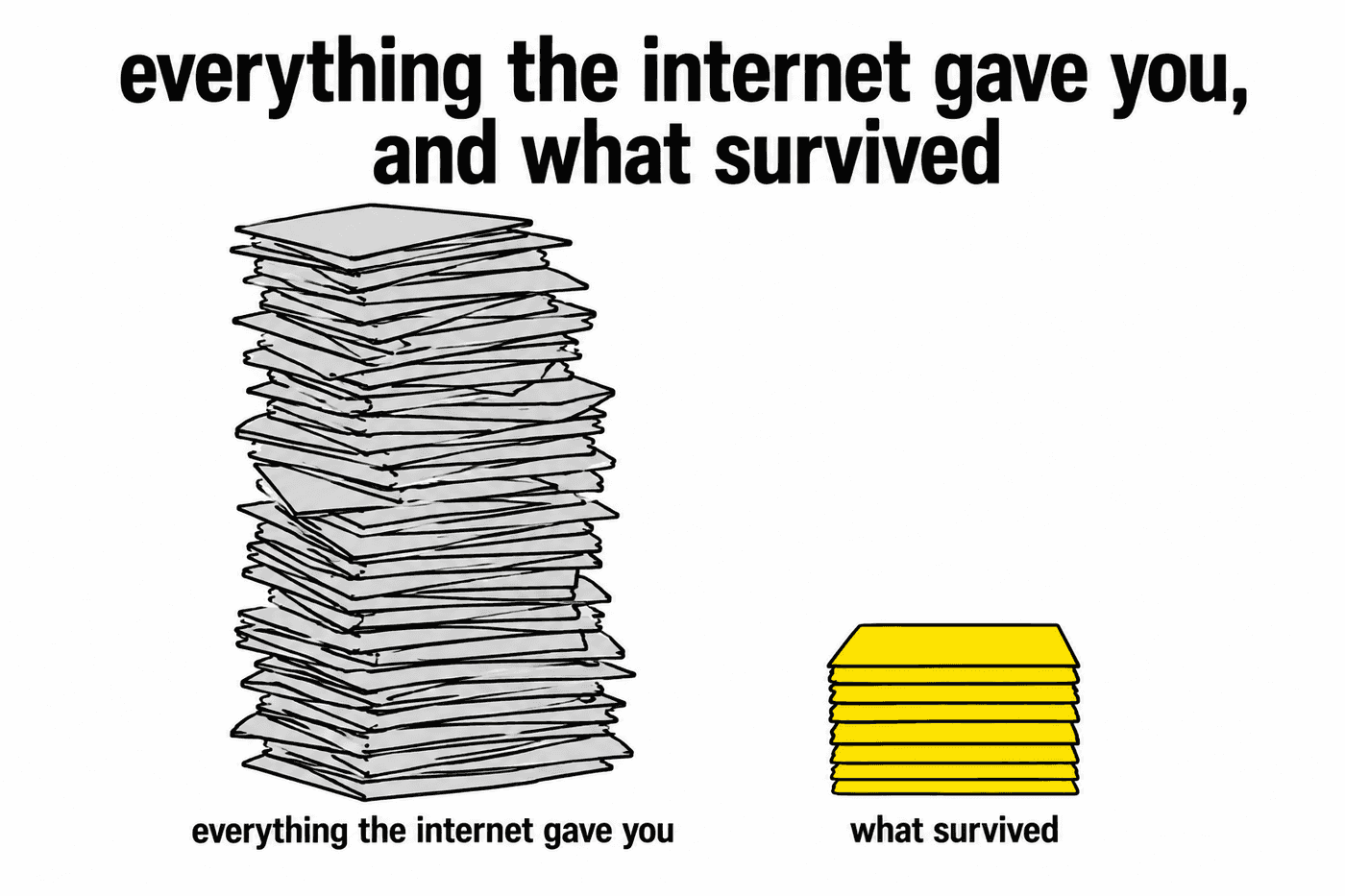
You have probably been told there are a thousand free resources online. That is true. That is the problem.
Search for “how to build with AI” and you get lists. Lists of tools. Lists of courses. Lists of essays by famous founders.
The lists tell you what exists. They do not tell you what it costs in rupees, whether you are allowed to open it, or whether you will understand a word of it.
So we opened them.
We went through every single link on this page. We checked three things.
One. What does it cost? In rupees. And what the free version actually gives you before it runs out.
Two. Whose account does it need? Yours, yours with a parent’s permission, or theirs.
Three. Can you read it? Or will you give up two minutes in.
The third question matters most.
A lot of famous advice for builders is written for adults in their late twenties. People raising money from investors. It is good advice. It is just not written for you.
You open it. You hit two paragraphs about co-founders and funding rounds. You close the tab.
That is not your fault.
This library is sorted into seven stages. You do not need to finish one before you start the next. But the order is on purpose. Thinking comes before tools. Tools come before selling.
One promise. If we could not find anything good and free for a stage, we say so. There are three places in this library where nothing good exists at all. We list those too.
An empty shelf is information.
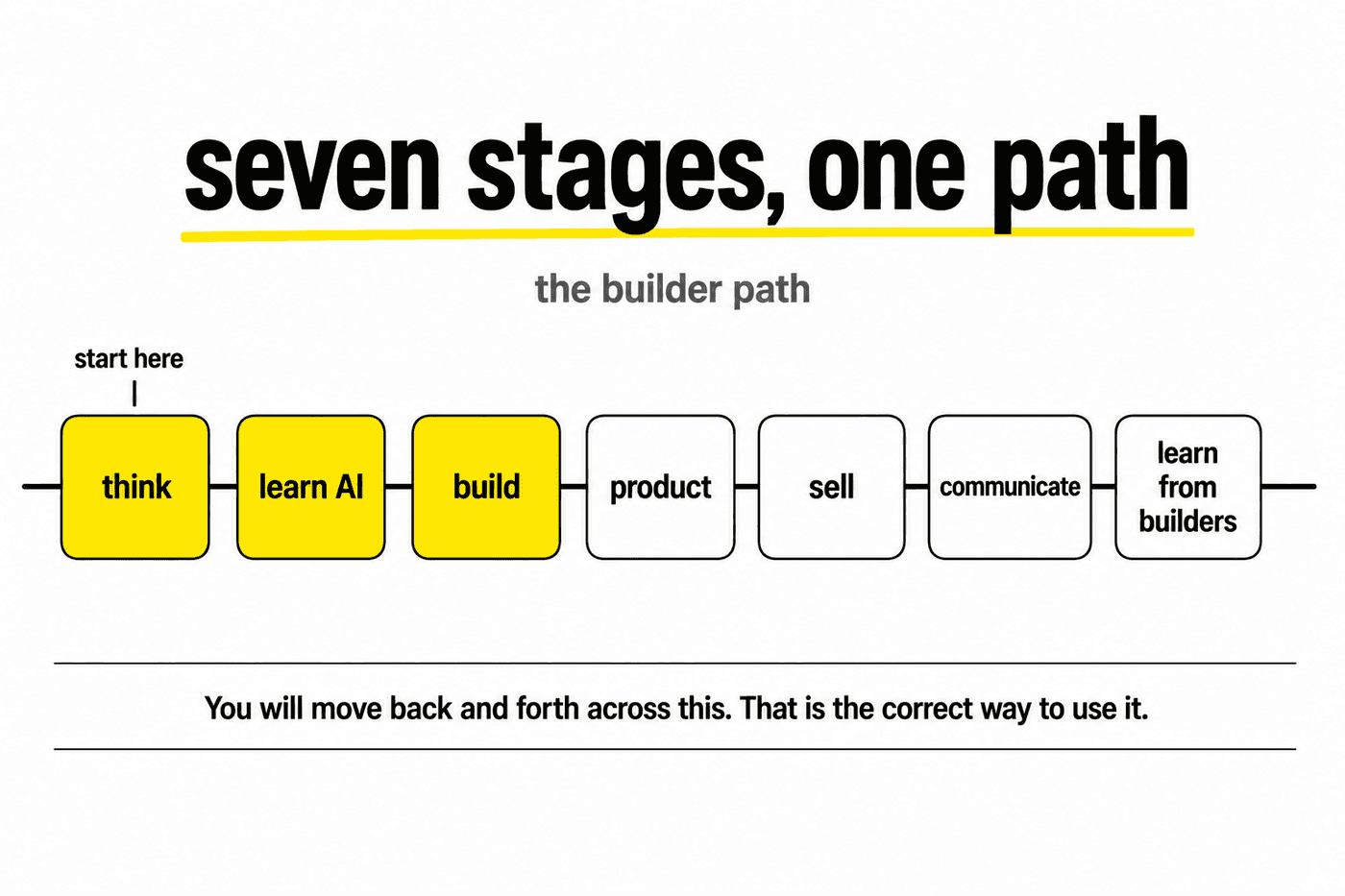
How to read this library
Every resource has three tags.
Cost. Free means free. Free to start means there is a limit you will hit, and we tell you where it is.
Whose account. At 13 you can sign some of these up yourself. Most of the rest are yours as soon as a parent agrees. A few will not let you sign up at all before 18, and we name every one of them. We read every terms page ourselves.
Level. Start at 14. Read at 16. Or come back after you have built something. We are being strict on purpose. It is kinder than sending you to something you will give up on.
One thing to sort out before you begin
one question decides it
from 13
Bolt and Supabase state no age at all, so treat them as this column too.
If you are 13, almost all of this is already open to you. Not “when you turn 18”. Now.
The one thing that decides it is whether your parents say yes. Most of these tools were built expecting that. They ask for a parent’s permission and then hand you your own account, in your own name, with your own work in it.
Nobody explains this properly, so students assume they are locked out and stop before they start. Here is the real picture. We read every terms page ourselves.
Group one. Sign up yourself, from 13.
GitHub, Netlify, Canva, Google Forms, NotebookLM and the Gemini app. Nothing else needed. Go.
Group two. Your own account, once a parent agrees.
ChatGPT, Replit and Lovable. All three say the same thing in their own words: you can be under 18, and a parent or guardian has to give permission. The account is yours. The permission is theirs.
So ask them once, properly. Not “can I use an app”. Show them what you want to build, tell them it needs their yes, and let them sit with you for the signup. That conversation takes ten minutes and it opens almost everything on this page.
Group three. The account belongs to a parent.
Claude, Cursor, Google AI Studio and Razorpay all say 18 and over with no exception at all, not even with a parent’s permission. Vercel says 16 and over. The parent is the account holder. You sit with them and do the work.
One honest note, because you will notice this yourself. Nothing stops you signing up. None of these sites check your age at the door, so a 13 year old can make an account in two minutes and use it for months. That is why so many people believe it is allowed. It is not the same thing as being allowed. Anthropic says it plainly on its own help pages: “We require all users to be at least 18 years old to create and use a Claude account”, and it uses app store age information to block access. Losing an account with six months of your work in it is a bad way to find out. Put it in a parent’s name from the start.
And here is the useful part. Nothing in group three blocks you, because every one of them has a replacement you can hold yourself.
| Instead of | Use | Same job |
|---|---|---|
| Claude | Gemini app or ChatGPT | Thinking and writing |
| Cursor | Replit | Writing and fixing code, yours from 13 with a parent’s yes |
| Google AI Studio | Gemini app | Working with a model |
| Vercel | Netlify | Putting your site online |
Only payments has no substitute. Under the Indian Contract Act of 1872, an agreement signed by anyone under 18 is void from the start. So no payment account can be in your name, whatever any website says. A parent holds it, the money lands in their bank account, and they are the one who deals with refunds and tax.
Talk to them on day one about that. Not on the day the first payment arrives.
DB Insight
Do not try to read everything here.
Read one thing. Build one thing.
A person who has finished one small project knows more than a person who has read this whole page.
Stage 1. How do builders actually think?
Builders do not wait for a good idea. They notice a small problem, make a rough first version, and let the idea improve while they work. The free resources below teach that habit. Start with one essay written for high school students, then join a group of teenagers who build things together.
Goal. Stop waiting for a good idea.
Most people believe the order is: get a great idea, then build it. So they wait. The idea never feels good enough, and the waiting feels like work.
Builders run the opposite order. They notice a small problem, make a bad first version, and let the idea improve while they build.
What You’ll Wish You’d Known, by Paul Graham
Free. No sign up. Start at 14.
Written in 2005, and one of very few essays by a famous founder that was actually written for high school students. It came from a talk he gave at a school. About 4,500 words. It is old and the examples are American. Read it anyway.
A Project of One’s Own, by Paul Graham
Free. About 2,100 words. Read at 15.
It names the difference between work you are assigned and work you choose. It does not tell you how to choose. That is fine.
Free for teenagers, forever. Ages 13 to 18. Start at 14.
There is nothing to read. It is a group of teenagers who build things together, run hackathons and share what they made. If you only click one link in Stage 1, click this one, because taking part is the same thing as building.
Design Thinking Bootleg, Stanford d.school
Free PDF. Read at 15, with a project in hand.
A set of cards, one method each, covering five steps: understand the person, name the problem, think of ideas, build a rough version, test it. Useless if you have no project. Very good if you do.
The Field Guide to Human Centred Design, IDEO.org
Free PDF. Read at 16.
Fifty seven methods. It is a reference manual, not a book.
What we left out, and why. Y Combinator’s Startup School is free and famous. It is also aimed at people forming a company and raising money, and it pushes co founder matching at new users. A fifteen year old who signs up gets pointed at being a founder before they have made anything. Come back to it after you have shipped one real thing. The same goes for Sam Altman’s Stanford lecture series from 2014.
DB Insight
There is a hole in this stage and you should know about it.
There is no free, step by step guide for a fifteen year old on how a builder thinks. There is one essay from 2005 and one community. Everything else is written either for adults raising money or for a teacher running a classroom.
That hole is why this library exists.
Stage 2. How do you learn to work with AI, not just ChatGPT?
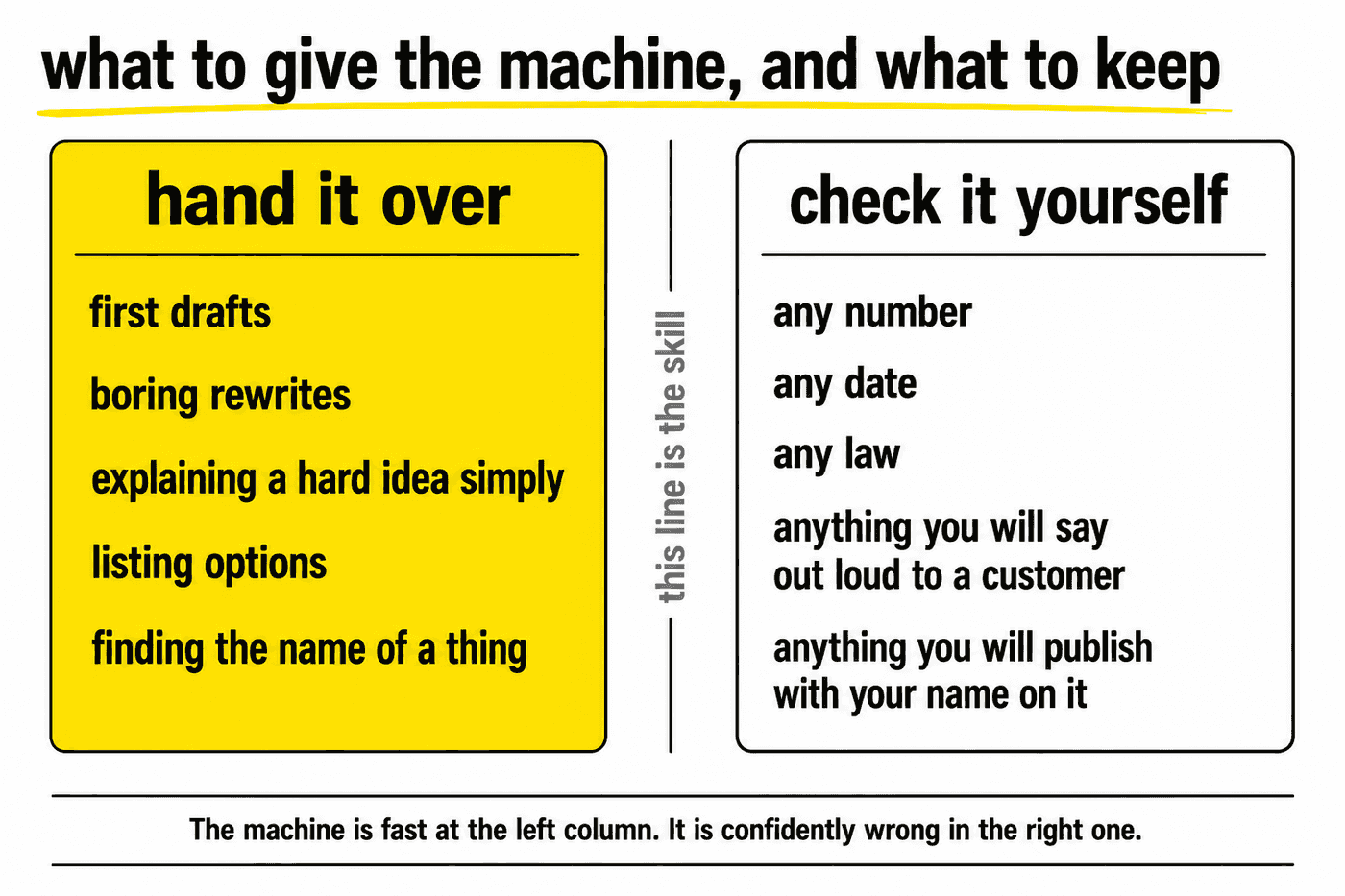
Working with AI means knowing what to hand over, how to describe it, and how to tell when the answer is wrong. It is a judgement skill, not a typing skill. Six free courses below teach it, including one from the Government of India that ends with a real certificate.
Goal. Not “learn ChatGPT”. Learn to hand work to a machine and judge what comes back.
Anyone can type a question into a chat box. The skill is knowing what to hand over, how to describe it, and how to spot when the answer is wrong.
Elements of AI, University of Helsinki
Free, all of it. Start at 14.
Part one needs no coding and no advanced maths. It teaches what AI actually is and, more usefully, what it cannot do.
Day of AI, from MIT
Free. Start at 14.
The units are sorted by real age bands rather than the word “beginner”. It is built for schools, so the sign up flow leans towards teachers.
YUVA AI for ALL, Government of India
Free. About four and a half hours, six modules. Start at 14.
Made under the IndiaAI Mission, with a government certificate at the end. It is basic. It will not change how you work. But the certificate is a real one, and schools and colleges here do count it, which is a reason to do it anyway.
NotebookLM, from Google
Free tier. Ages 13 and over. Start at 14.
You upload your own notes, textbook chapters or research papers, then ask questions about them. The easiest one to justify to a teacher, because it works only on material you supply.
Free. About an hour per course. ChatGPT allows 13 and over with a parent’s permission. Read at 16.
Be clear about what this is. It teaches you ChatGPT. It does not teach you AI.
Free, with a certificate. Read at 16.
The best free explanation we found of how to hand work to a model and then judge what comes back. Take the course. Then use what it teaches inside ChatGPT or the Gemini app, because the ideas move across.
One thing to know, since nobody says it. Anthropic’s own terms require users to be 18 or over, with no parental permission route. So you can pass a course called AI Fluency for Students and still not be allowed your own account on the tool it teaches. If you want to use Claude itself, it has to be a parent’s account, with them there.
What we left out, and why. Google AI Studio and the Gemini API require you to be 18 or over. That is in their terms, in writing. The Gemini app on a normal Google account is 13 and over, so use that instead. Hugging Face’s courses are free and excellent, and their first chapter asks for good Python plus a prior deep learning course. That belongs in a coding track, not here.
Stage 3. What do you actually need to build and launch something?
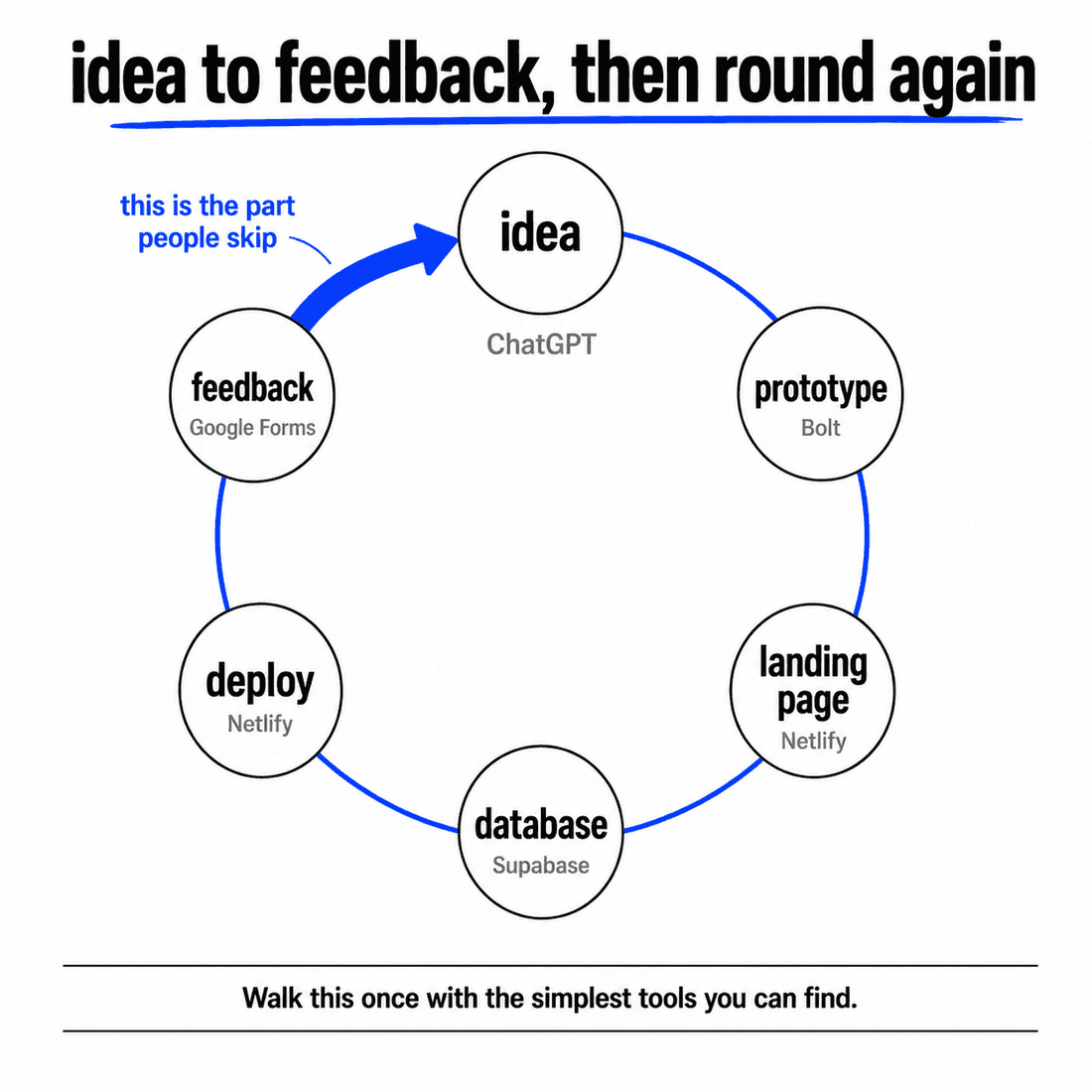
Six things: a way to think, a tool that turns a description into a screen, a place to put your site online, a database, somewhere to keep your code, and a way to collect feedback. Every one has a free plan. Only payments has to sit in a parent’s name.
Goal. Get one thing from idea to live on the internet.
Do not think of this as a list of tools. Think of it as one path.
Idea, then prototype, then landing page, then database, then deploy, then feedback.
It is easy to collect tools and never walk the path. Walk it once with the simplest tools you can find, and you will understand more than a person who has read about all of them.
Every price and limit below was checked in August 2026. Free tiers change often, so check again before you rely on one.
Free daily credits. Paid from about ₹2,200 a month. Yours from 13, once a parent agrees.
Their terms say 13 and over, and under 18 you need a parent or guardian’s permission. That is the kindest rule of any building tool here. It holds your code, your database and your website in one place, and on the free plan you can keep one project live at a time. If you are under 18 and want one place to start, start here.
Free: 300,000 tokens a day, 1 million a month. Paid from about ₹2,200 a month. Age rule: not stated.
You describe a screen and it builds it. Tokens are hard to see, so you cannot tell what a request will cost until it is spent. We could not find any age rule in their terms, which is worth knowing.
Free: 5 credits a day, but only 30 a month. Your own account, if a parent agrees.
Their terms say 18 and over, then add that under 18 you must have a parent or guardian’s permission. So the account can be yours. Thirty credits is about thirty requests. Most beginners spend most of their requests fixing what the last request broke. The month can end in one afternoon.
Free. Ages 13 and over.
This is where your code lives so you cannot lose it. As many projects as you like. The hard part is not GitHub. The hard part is the system underneath it.
Free: 300 credits a month. Ages 13 and over.
This puts your site on the internet. Each time you publish, it costs 15 credits, so that is about twenty publishes a month. When the credits run out the site pauses, which means it goes offline. Beginners republish after every small fix, so watch this one.
Free: 2 projects, 500 MB database. Age rule: not stated.
This remembers things for you, like who signed up. One rule will catch you out. A free project goes to sleep after one week with no use. So the project you want to show a teacher after exams may simply be asleep.
Free with a normal Google account. Ages 13 and over.
This is how you ask people questions. But it gives you opinions, not actions. Ask “would you use this?” and everyone says yes to be nice.
2% plus GST on each payment. Ages 18 and over, with PAN and bank checks.
This is how money reaches you. There is no legal way for someone under 18 to open one. A parent opens it in their name. That also means the parent is the one who deals with refunds and tax, so talk to them first.
About ₹1,750 a month. Parent’s account.
Their terms say 18 or the age of majority, with no permission route at all. So this one is not yours to open. It is also a tool for changing code you already have, not for making something from nothing, so if you arrive here from Lovable you will find nothing to click. Use Replit instead. It does the same job and you can hold the account yourself from 13.
Free plan exists. Ages 16 and over, no permission route.
So if you are 14 or 15, this has to be a parent’s account. There is a second catch on top. Its free plan is only for projects that do not make money, in their own words. The day your project takes a payment you are outside the rules. Use Netlify. Same job, your own account from 13, and no rule about earning.
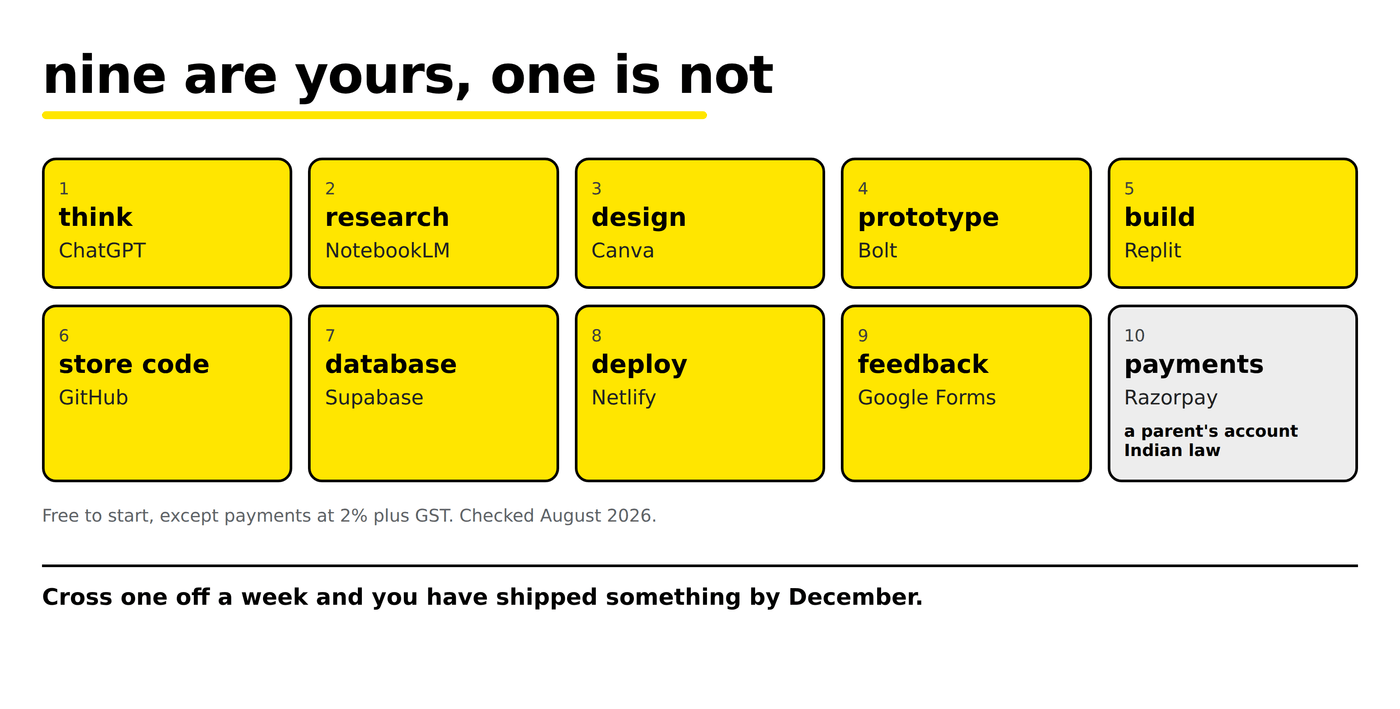
The Builder Stack 2026
| Stage | Tool | Whose account |
|---|---|---|
| think | ChatGPT | Yours, with a parent’s yes |
| research | NotebookLM | Yours, from 13 |
| design | Canva | Yours, from 13 |
| prototype | Bolt | No age stated |
| build | Replit | Yours, with a parent’s yes |
| store code | GitHub | Yours, from 13 |
| database | Supabase | No age stated |
| deploy | Netlify | Yours, from 13 |
| feedback | Google Forms | Yours, from 13 |
| payments | Razorpay | A parent’s |
Everything here is free to start except payments, which costs 2% plus GST per payment.
Only one row has to sit in someone else’s name, and that is Indian law rather than a company rule. Two rows say no age stated, because Bolt and Supabase give no age anywhere in their terms and we will not guess on your behalf.
Print that table. Cross off each row as you do it. That is the whole path.
Stage 4. Why do some products get used and others do not?
Because someone needed them. Product thinking is asking why a thing gets used, not how it gets built. This is the thinnest stage here for your age. One free video series is genuinely made for school students, and for the rest we tell you which parts still work and which to skip.
Goal. Understand why a thing gets used, not just how it gets built.
Crash Course Business: Entrepreneurship
Free on YouTube. Start at 14.
Made by a team that makes videos for school students. That is why it is the only thing in this stage made for your age.
How to Build a Startup, by Steve Blank
Free. Fourteen short lessons. Read at 16.
Short videos are easier to finish than long articles. The examples are still about adults and money.
Design Thinking Bootleg and IDEO’s Design Kit
Both free. Both listed in Stage 1. Both work here too.
Some posts free, most paid. Read at 17, or skip.
Worth knowing: the one post that would explain the basics sits behind a paid wall, and the free ones assume you already have a job.
DB Insight
We could not find a single free explanation of Jobs to be Done, the most useful idea in product thinking, written at a level a sixteen year old could read.
The versions we could find live in business school articles written for company executives.
Stage 5. How does a teenager learn to sell?
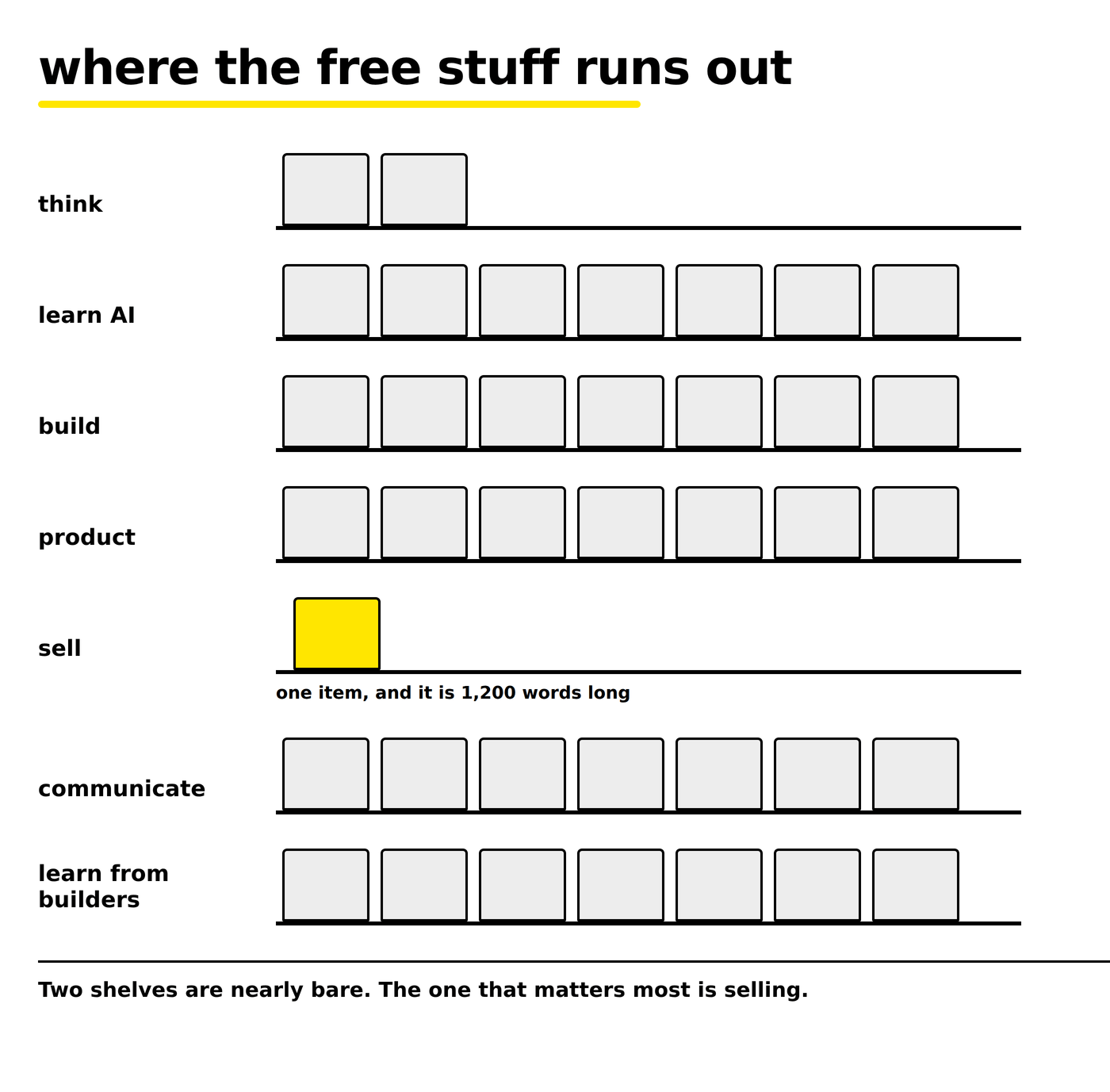
By having conversations, not by reading about them. Selling at your age means asking better questions and listening to what people already do. We searched hard and found almost nothing free written for a teenager. Four resources exist, one of them at your reading level, and we list all four honestly.
Goal. Ask better questions. Listen. Make your first hundred rupees.
We need to be honest about this stage. We looked hard and it is close to empty.
Almost everything we found assumes you are an adult with a company and a product. We could not find a single free guide on how a sixteen year old should talk to a shopkeeper, a classmate, a tuition teacher or a neighbour about something they made.
Here is what does exist.
A short guide to The Mom Test, by Sachin Rekhi
Free. About 1,100 words. Read at 16.
The Mom Test is the standard book on how to ask questions without people lying to be polite. The author gives nothing away free on his own site, so this short summary is the best free version there is. It gives you real questions to ask. It also names the three things a person can give you that prove they mean it: their time, their name, or their money.
How to Talk to Users, Y Combinator
Free video. Read at 16.
Good on hearing what people actually mean, not what they say. It assumes you already have users.
Free full PDF, no sign up.
About 110 pages on running cheap tests before you build. Written for adults who work in teams.
Free. About 1,200 words.
The only thing in this whole stage written for someone your age. What to sell, where to put a poster, and how to get permission from your school before you start. That last part is the most useful bit on the page.
DB Insight
Selling is the skill with the least free material and the highest return.
That is not a coincidence. You cannot learn it by reading. You learn it by having ten uncomfortable conversations.
So do that instead. Ten short conversations with people who are not your friends. Ask what they do now, not what they would like.
Stage 6. How do you explain the thing you made?
the same sentence, before and after
before
Our platform leverages cutting-edge artificial intelligence to empower young innovators to seamlessly ideate, prototype and deploy scalable solutions that address real-world problems in their immediate communities and beyond.
after
We help teenagers build something real, and put it on the internet.
same meaning, a third of the words
Speaking, writing and design, in that order of how much free material exists. Six free resources below, several needing no account at all. Start with Paul Graham on writing simply, which takes four minutes, then the TED-Ed public speaking lessons, which are the best fit for your age in this library.
Goal. Explain the thing you made to a person who has never heard of it.
Public Speaking 101, TED-Ed
Free, no account needed. Six short lessons. Start at 14.
The best fit for your age in this whole library. Each lesson has questions at the end so you can check you followed it.
How to Speak, MIT
Free lecture by Patrick Winston. Read at 16.
Clear rules for giving a talk. Every example is from a college, so you have to move it across to your own life.
Writing Well, by Julian Shapiro
Free, no sign up. Five lessons, about thirty minutes in total. Start at 14.
Plain words. No hard vocabulary.
Write Simply, by Paul Graham
Free. 430 words. Start at 14.
It takes four minutes and it will change how you write emails. Start here if you start anywhere.
Practical Typography, by Matthew Butterick
Free to read online. Read at 15.
Start with the part called typography in ten minutes. It only covers how words look on a page. But how words look is most of the reason a page looks amateur.
Pixar in a Box, Khan Academy
Free. Six lessons taught by Pixar film makers. Start at 14.
This is storytelling for films, so it will not teach you to explain your product. It will teach you shape, which is half the job.
The gap here. Design is thin. After typography, we found nothing free and trustworthy at your level on layout or colour. And there is nothing at all on the thing you need most: telling the story of something you made, to a person who might use it.
Stage 7. What can you learn from builders who have actually done it?
One person, one lesson, not a biography. Five builders worth reading from anywhere in the world, then seven Indian companies that designed and built hard things here: rockets, motorcycles, satellites and software. Each carries one verified fact about how they built it, and one thing you can copy this week.
Goal. One person. One lesson. Not a biography.
Read these
What You’ll Wish You’d Known, Paul Graham
Listed in Stage 1. Still the one we point to first for people your age.
Advice, Patrick Collison
Free. About 850 words. Read at 15.
It has a part written for people aged 10 to 20. Short and blunt. He tells you what he thinks and does not explain why.
Free. About eighteen minutes. Start at 14.
The easiest thing to follow by the man who runs Nvidia. He tells a story about a gardener in Japan who has looked after one garden for twenty five years, and who says he has plenty of time.
Free. Twenty five minutes, with a written version. Start at 14.
How a boy who loved games ended up building an AI that works out the shape of proteins.
Melanie Perkins on How I Built This
Free. Forty nine minutes, sound only. Listen at 14.
She built a school yearbook business first, and Canva second. The order is the lesson.
Now read the Indians
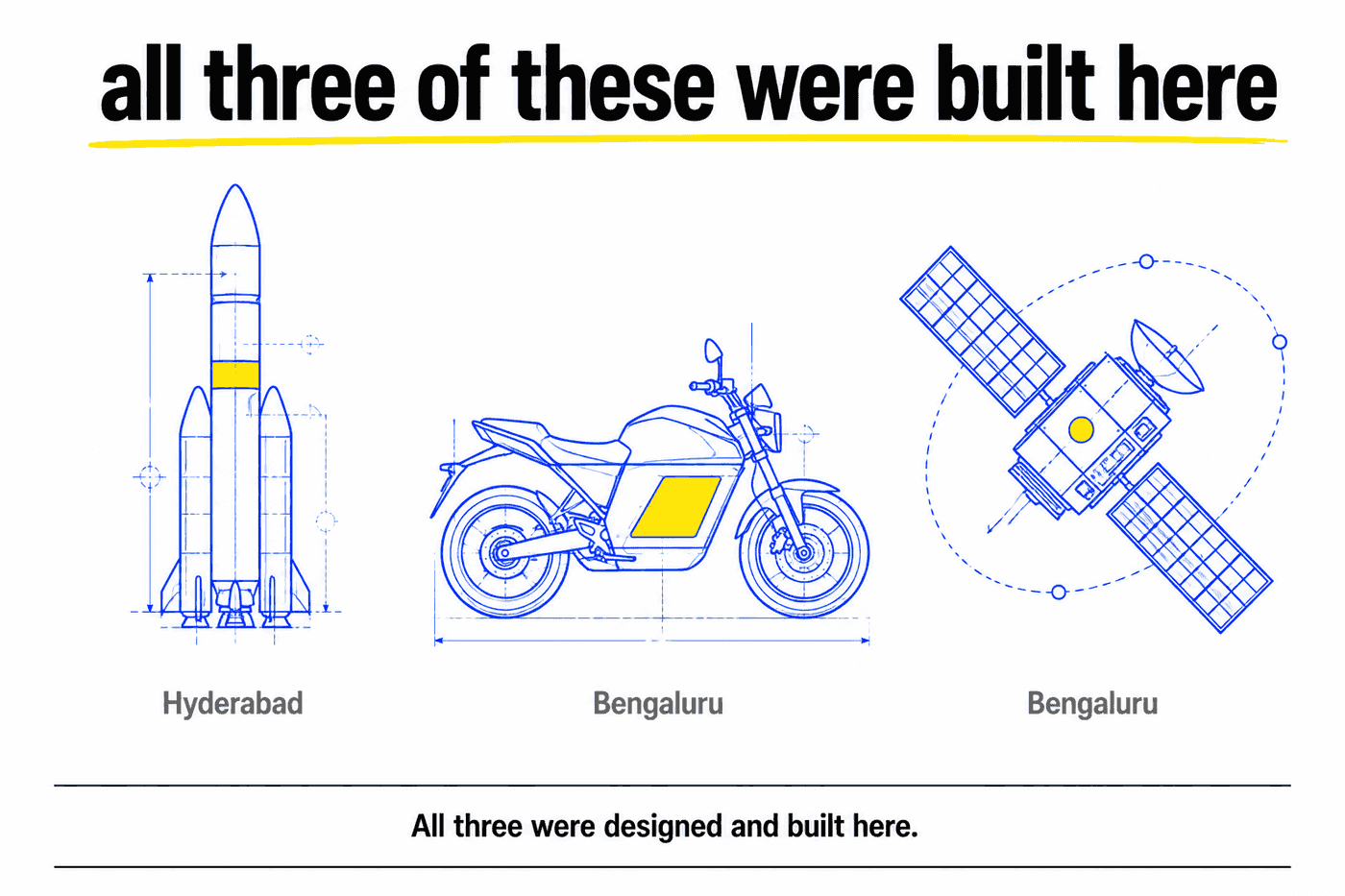
Read only the names above and you learn something false without noticing. You learn that building happens somewhere else.
Skyroot Aerospace, Hyderabad
Started in 2018 by two engineers who left ISRO. On 18 November 2022 their Vikram-S rocket flew from Sriharikota. It was the first rocket built by a private Indian company to do so. On 18 July 2026 their Vikram-1 reached orbit, which ISRO recorded as the first orbital launch by a private Indian company from Indian soil.
Here is the part worth sitting with. In December 2020 they test fired India’s first fully private solid rocket stage. At that point they had raised about 4.3 million dollars in total. They built a working rocket stage on that. The big money came later, after the hardest work was already done.
One more thing. One of the founders once scored 51 out of 100 in a school maths exam.
The lesson. Get close to the thing before you try to own it. He spent six years inside ISRO learning how rockets fail. Then he left.
Ultraviolette Automotive, Bengaluru
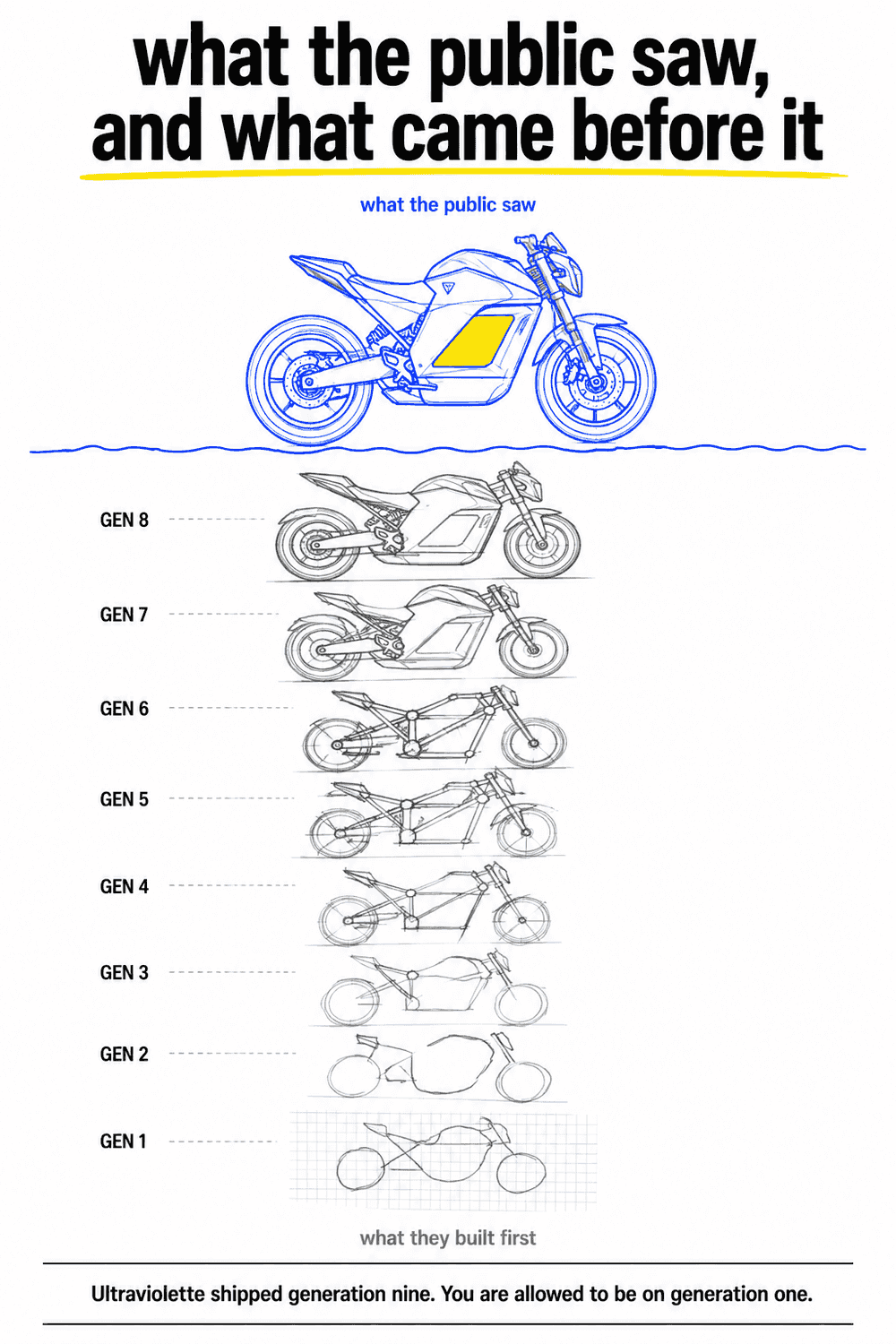
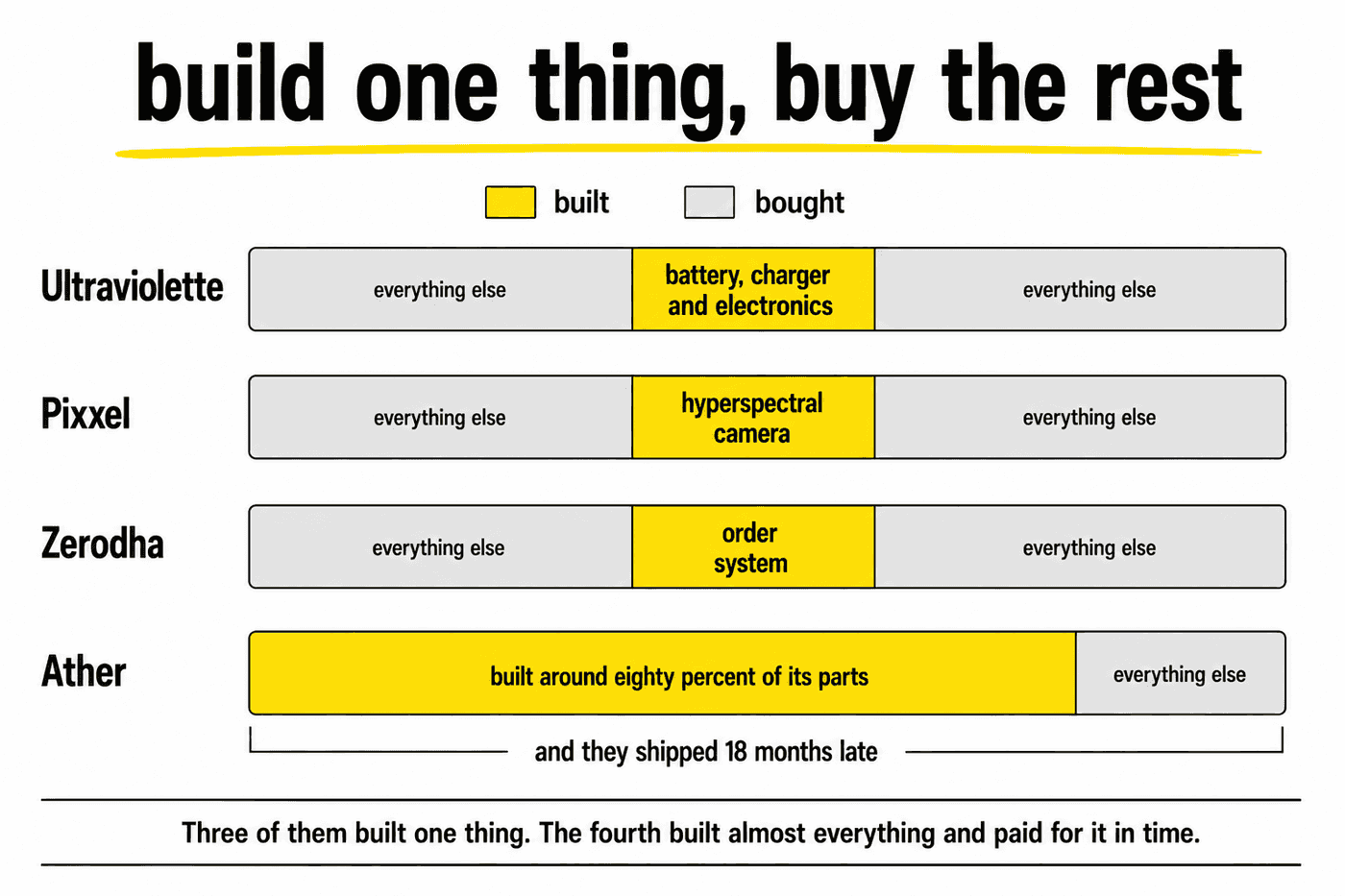
Started in 2016 by two people who have known each other since class five. They built the F77 electric motorcycle. Not just the shape. The battery, the charger and the electronics as well.
Their early motors came from small aeroplanes, the kind with propellers. So they had to redesign them to survive an Indian monsoon, because an aeroplane motor never has to sit in the rain.
Here is the number to remember. The public saw one motorcycle. By their own account, they had already built nine versions of the bike and seven versions of the battery before that.
The lesson. Build a bad version one this week and keep it. The gap between a school project and a real product is mostly the versions nobody saw.
Agnikul Cosmos, Chennai
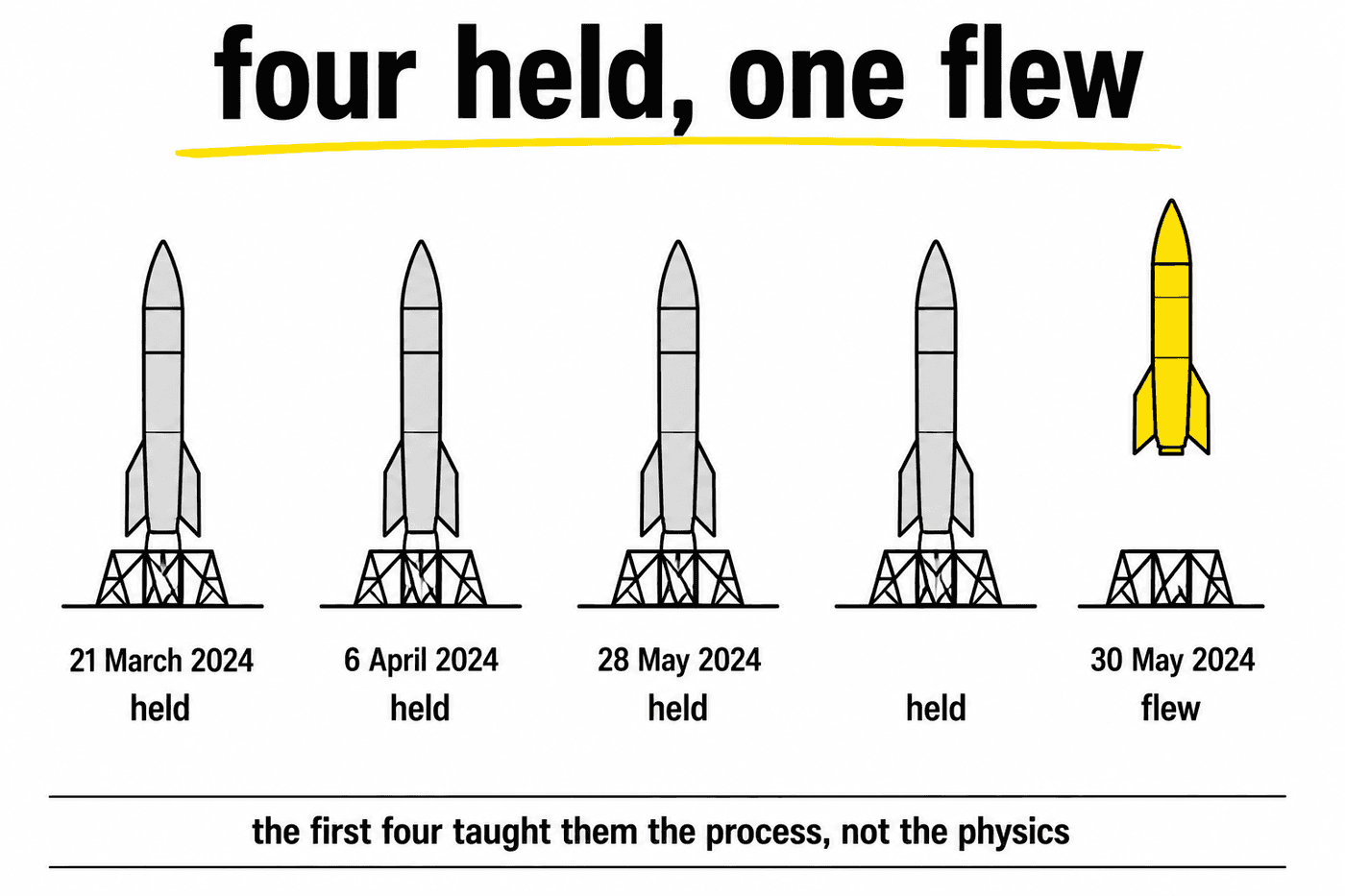
A normal rocket engine is hundreds of pieces joined together, and every join is a place it can crack. Agnikul prints the whole engine as one single piece of metal. On 30 May 2024 their Agnibaan rocket flew from India’s first private launch pad.
It flew on the fifth attempt. Four launches before it were called off. One of them was stopped less than a minute before lift off.
Their chief said afterwards that building the rocket was one problem, and working with ISRO to actually launch it was a completely different problem they had never done before. The four stopped launches were the practice.
The lesson. When something fails, write down the one thing you learned before you try again.
Pixxel, Bengaluru
Started in February 2019 by two students at BITS Pilani. Your eye sees three colours: red, green and blue. Their satellites see more than 150. From 550 km above the ground, that is enough to tell a sick crop from a healthy one.
It started as a college club. Both founders were on their university’s student satellite team. They had already built a satellite once, for nobody, for free.
They also make a clear choice about what to build. They build the camera and the computer themselves and buy the ordinary parts.
The lesson. Join the club version of the thing. Then do the boring job nobody else wants.
Ather Energy, Bengaluru
Started in 2013 by two IIT Madras graduates. They designed an electric scooter from a blank sheet of paper, and made about 80 percent of the parts themselves instead of buying parts that already existed.
Before they drew anything, they spent about two and a half months writing down what every single part had to do.
And they were still 18 months late. Around 80 percent of their engineers had never built a vehicle before joining. This one is on the list as a warning as much as an example.
The lesson. Before your next project, spend thirty minutes writing down what finished means, in numbers.
Zoho, Tamil Nadu
A software company used all over the world that has never taken money from outside investors. Every product had to be paid for by customers. One of its products was built in an office in Tenkasi, a small town in southern Tamil Nadu, not in Bengaluru and not in America.
Then there is their school. It takes people straight out of Class 12, with no college degree needed. It teaches them free for two years and pays them while they learn. It gets around 20,000 applications a year. More than 2,000 people have come through it, and they now make up over a tenth of the company.
The lesson. What you can build is the certificate. Make one small thing that works from start to finish, and put it somewhere a stranger can see it.
Zerodha, Bengaluru
Started in 2010 by two brothers, with no outside investors. One of them left school after Class 10. Their head of technology still writes code himself.
They spent more than two and a half years building their own order system instead of using one someone else sold them. They set themselves one hard rule: the site must answer a user in under 40 milliseconds, on average. When the code gets messy, they stop adding new features until it is cleaned up. Their head of technology sums it up: “We move slowly and with care.”
If you want to read an Indian founder in his own words, start with Our Story till now. It is about 2,000 words and he wrote it himself.
The lesson. Set one rule you can measure, and refuse to break it. Theirs was 40 milliseconds. Yours could be that you never submit work without reading it once more.
DB Insight
Notice what these seven have in common.
They all built the one thing nobody would sell them, and bought everything else. Ultraviolette built batteries because no supplier had them. Pixxel builds the camera and buys the sensors. Zerodha built the order system and nothing more.
You do not need to build everything. You need to know which one thing is yours.
What is missing, and what we are doing about it
Three holes came up again and again while we checked these links.
1. Indian builders rarely write in their own words. Hunting for readable first-hand writing by the founders in Stage 7, the only one we found was Zerodha, where both the founder and the head of technology publish their own posts. For the others we could only find interviews and magazine profiles, which are a journalist’s summary rather than a builder’s own thinking.
2. Nothing free teaches a teenager to sell. Stage 5 is nearly empty. It is also the stage that pays back the most.
3. The account rules are hard to find. Some tools let you sign up alone at 13. Some let you sign up if a parent agrees. Some will not let you sign up at all until you are 18, not even with permission. All of it sits in terms pages that nobody reads, so students either give up or break a rule they never knew existed.
We are going to write into those holes. Not because we know everything. Because we checked, and nobody else did.
Do this one thing this week
Do not save this page and feel like you have done something. That feeling is a trap. Saving is not starting.
Pick one link. Open it now. Finish it before Sunday.
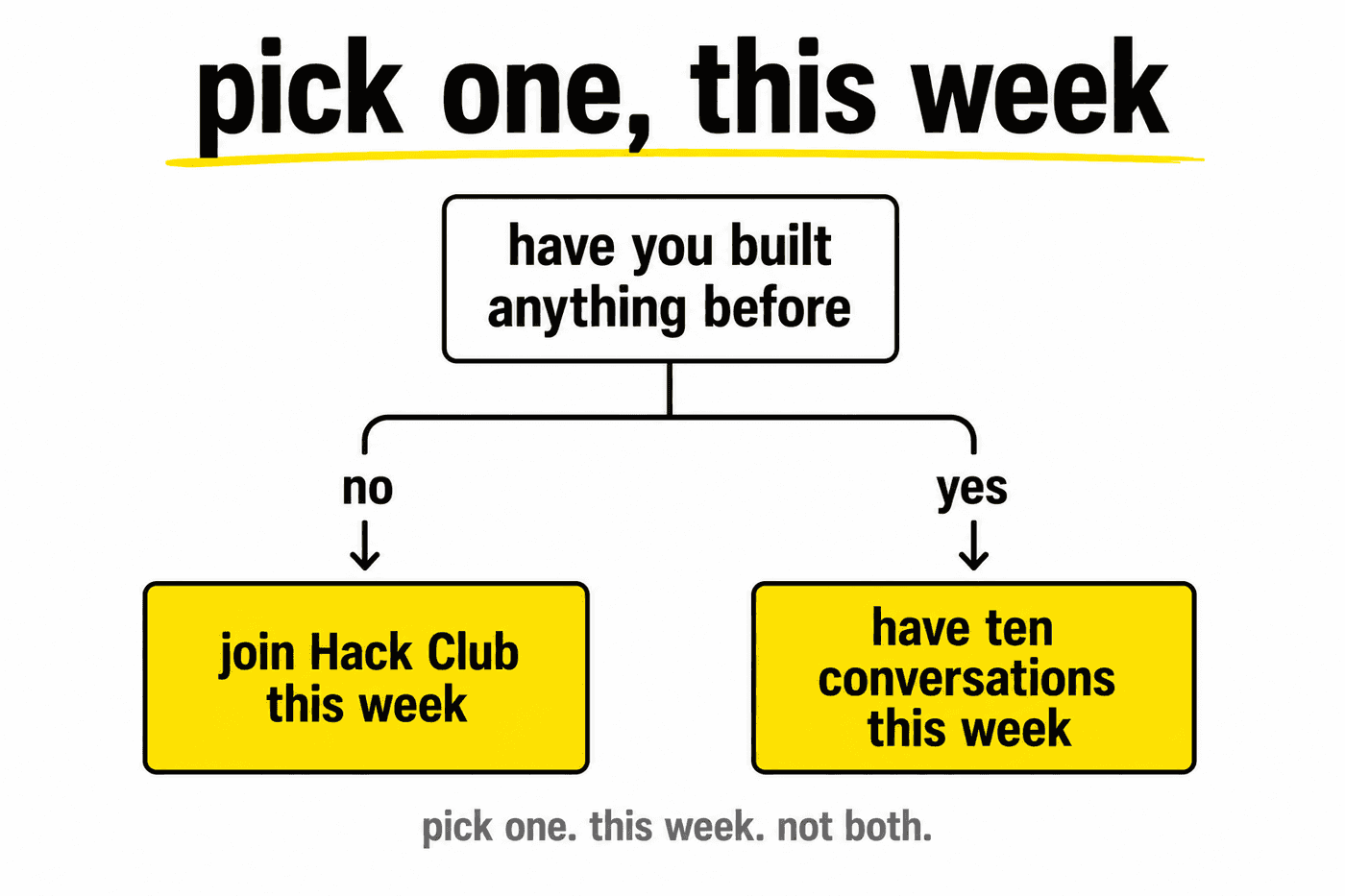
If you have never built anything, make it Hack Club.
If you have already built something small, make it the ten conversations in Stage 5.
Then come back and cross off the next row of the Builder Stack.
What next? Are you ready to dive in
This page gives you the tools. It cannot give you the deadline, the people building beside you, or someone asking every week what you shipped. The Builder’s Sprint is a six-week programme where twelve students use these same tools to build and launch one real product.
Explore The Builder’s SprintEvery link on this page was opened and checked in August 2026. Free plans and prices change often. If you find something out of date, tell us and we will fix it.
FAQ
Can a 13 year old use ChatGPT in India?
Can someone under 18 use Claude?
Do you need to know how to code to build with AI?
What does it actually cost to build and launch something as a student in India?
Can a student under 18 take payments in India?
Which free AI tool is best for a school student?
What is the fastest way to start this week?
What we could not check
We would rather tell you than guess.
- Canva’s free plan and prices. Canva blocks automatic checking, so we have not put any Canva price on this page. The age rule of 13 and over is confirmed from their own terms.
- Bolt’s minimum age. Their terms page cannot be read by checking tools, and the parent company’s terms contain no age rule at all.
- Supabase’s minimum age. Their terms contain no age rule. Their privacy policy only says the service is not meant for children under 13.
- How high the Agnibaan rocket flew. Two trustworthy sources give figures that differ by more than double, so we have given no height.
- How many stages the Vikram-1 rocket has. Sources disagree. Not stated.
- What Agnikul’s engine costs to print. The figure you see quoted comes from the company’s own interview, not from an independent check.
- The founders’ ages. We could not confirm the age of a single founder on this page from a trustworthy source, so we have not said any of them.
We have also left out company valuations and funding totals on purpose. They go out of date fast, and they teach you to measure the wrong thing.

Nimish · Founder & CEO
20+ years in product and growth, including scaling redBus from 500,000 to 5 million users. MBA from Thunderbird, and founder of Dekoding Brilliance, which designs hands-on programs teaching high-schoolers operational, building, and research skills.